
Barcelona youth coverage reaches its final part. After covering Goalkeepers and defense in part one, then the midfield in the second part, we move to the final stage:
Offense
Barcelona’s current system demands certain type of players to serve offense. We can classify the offense needs in two categories:
1) Players capable of playing a dual wing/inside-forward role.
2) What I like to call “Total Football Strikers”.
We will follow the same method we used in the first two parts, scouting the first team needs to figure the opportunities available.
Wing/inside-forward
In the first team, there are already quality players to serve the first category for many seasons to come. Messi (exactly 24 years old by the end of this season), and Pedro (same age as Messi) are long term knights for the squad.
Bojan (21 by the end of the season) is another quality-under-observation player for the future if he completes his learning curve steadily –I see more future for him as a converted inside striker than a nine. Afellay (25 years old) will be an option if he ticked all the boxes.
Jeffren is a talent that I’m not so optimist about at the moment. He is injury prone, and if the medical staff has no solution for that, his future at the club is in serious doubt.
Iniesta proved –unlike the common belief- that he can offer world class performance from the flank.
We must not forget Villa who is a better inside forward –Henry style- than a striker. Even Maxwell and Adriano are capable for that advanced role. There are no reasons to be concerned about Barcelona’s offense on the flanks for the short term. But if we take in consideration that one of the mentioned names has to play as a striker (Messi/Villa), two of the names are yet to confirm their validity for the future (Jeffren/Bojan) and two of the options are better as midfielders (Afellay/Iniesta), we can open a path of hope for Barcelona’s reserve players to break through to the first team.
Are their quality players for that category at Barcelona B?
Generally speaking, most of Barcelona B players who can play on the wing are at the same age or older than the first team players. Unlike the other departments (Keepers, Defenders, Midfielders) there isn’t a continuity queue that go smoothly in a balance with age, time and experience.
Víctor Vázquez and Jonathan Soriano are the first to be noted. The first was considered once the best attacker in the youth squad that included Messi. He was that good. Then an injury at the worst time hammered his progress (to prove again the unpredictability of youth progress). He is struggling to catch up, and one can only hope he get more playing time at the first team this season to show his progress. I am still a believer in Vázquez and I think if he makes a comeback, Barcelona will have a world class player to count on for a long time. But if we take in consideration the players available in the first team, it is highly unlikely, and that’s a shame.
Soriano gives you a feeling that he is a quality reserve player who will struggle to get anywhere further. Besides, he is more a center forward than a wing. Both seems too settled to their role in the reserve and Pep showed little interest in offering them time (compared to other youth). But we all know Pedro’s tale and there is always a chance that another Pedro may spark his talent anytime. Will they have a chance in the first team this season? It is highly unlikely. The other options available are a bit too old to catch up the progress of younger players.
Total Football Strikers
There is no doubt that this is one of the most demanding positions in Pep’s system. Pep knew exactly what he wanted since day one. I tend not to talk about the Ibrahimovic experience anymore for obvious reasons. Yet, we have to track Pep’s approach toward the kind of strikers he was looking for in order to understand the needs of the future. And for the record, I had –and still have- the same belief as Pep regarding this case. In other words, he was not wrong –IMO. He was just unfortunate.
Barca’s offense review:
Pep needed a striker who has Eto’o’s qualities in terms of aggression, work rate, and well calculated runs into the area to finish. But at the same time, he felt the need of having a striker who can open to the flanks, work as a false nine, and play inside the box when needed. Such additional qualities are as crucial for Pep’s platform to work because it creates more fluidity and positions interchange between offense players where everyone is capable of playing every where. It also solves the complexities appear every time the fluidity of the team is damaged by opponents’ tactics or players’ form. It offers a standard offense mechanism that is less dependent on spaces and possession. It helps countering the ultra defensive tactics where the players suffer to find spaces to exchange passes and dribble the ball to the net.
After the first season at the club, Pep became more certain of his demands. The offense worked perfectly there because the offense trio complimented each other and covered each others deficiencies. Yet, in many occasions, the lacking was too obvious for a coach like Pep to ignore. Against Chelsea for example, the absence of Henry who used to play the inside forward role led to an offense sterility where only luck and controversial referring helped Barcelona to overcome. There was a need for something different to counter offense predictability. Pep was looking for a forward who can clone this one:
Pep Guardiola captained Barcelona when they lost 4-0 against Van Basten’s Milan in the historical champions’ league final (Though the striker didn’t play that match). Van Basten’s quality dominated Europe at that period of time and even while suffering a knee injury, he was able to perform at a level that put him at the top of the best strikers List. In my opinion he is the most complete striker ever –and by a margin.
It is a given that finding the new Van Basten is like searching for Aliens in Space. But if there is a player who could be considered as a work-in-progress to come close to Marco's level, that’s the player Pep demanded and Barcelona bought.
There were valid concerns about Ibrahimovic work rate and attitude. Will he learn to do his defensive role? Will he become more a team player than a solo performer? I do think Henry’s tale at Barcelona provided Pep with a hope that there are possibilities. The risk was high, but the potentials –if worked- were immense. Things started well –when at the beginning of the season it was more about individual quality than personal conduct. Then an injury at the wrong timing created the first challenge. In that grey area between Ibra’s attitude and Pep’s man management damage happened and fed the stream of concurred interests leading to offloading the player.
Currently, Barcelona’s offense could be described as lethal, but not perfect. Having Villa forced Pep to use Messi as a (false) nine. I think that was an intelligent decision. But it was more dictated option than a selected one. Villa is a better player in Henry’s role, so he plays there. He added the quality Barcelona missed last season where Henry was in a comma and Pedro was still finding his way to the selection. Pedro is just getting better and his current form makes him a definite starter. Messi simply plays where the other two can’t, ‘cause when in the right form he performs brilliantly anywhere.
The team is back to square one where the system represents an offense of massive destruction-as long as it rolls. The defect there is that this system lacks the diversity needed to do things differently when needed.
Will Barcelona’s youth provide a solution?
As already noted, it is not easy to find a complete striker who meets all the demands of the position at Barcelona. The back up plan is to have a poacher –Target man, A.K.A Larsson- on the bench and a more versatile striker as a starter. Barcelona B provides no interesting names at the moment for any of the mentioned positions. The most qualified alternatives are already older than those available in the first team. I had lot of expectations on Rubén Rochina, but it seems he is struggling to comeback after his injury. Nolito is a bull (Tevez-ic) type of forwards, but he has one foot and an arm outside the club already (He is not a rare talent anyway). So, generally speaking, Barcelona may count on Bojan to do part of the job for the future, but they will still need to look elsewhere for a striker who can complete the offense puzzle.
This offense drought in the reserve team is not permanent, and Barcelona fans should be unconcerned about it. Deep inside the youth veins a very exciting generation is in progress. The likes of Gerard Deulofeu, Gael Junior Etock, Mauro Icardi and Alain Richard Ebwelle are just samples of what is coming next. And you can smell excitement in the air. It is hard to predict who will keep on progressing to meet expectations, but any of the candidates can end up being the new revelation for Barcelona’s offense in the coming years. I cant wait till the mentioned four earn their promotion to Barcelona B.
Per marcos_c suggestion through Football Mood Twitter, the image bellow is an attempt to rate some of the reserve players and their chances in the first team. I took a wide range of conditions in consideration, but by no mean I take this presentation as a definite roadmap. Players’ progress is an extremely unpredictable matter.

1) Rubén Miño Peralta
2) Martín Montoya Torralbo
3) Andreu Fontàs Prat
4) Sergi Gómez Solà
5) Carles Planas Antolínez
6) Marc Bartra Aregall
7) Marc Muniesa Martínez
8) Oriol Romeu Vidal
9) Jonathan dos Santos Ramírez
10) Thiago Alcántara do Nascimiento
11) Sergi Roberto Carnicer
12) Martí Riverola Bataller
13) Jonathan Soriano Casas
14) Víctor Vázquez Solsona
15) Rubén Rochina Naixes
Finally, big thanks for Anonymous_69, a regular contributor, who in the comments session suggested writing about Barcelona’s best selection and about Youth future at the club that ends here (Links to part one, and part two). All comments and suggestions are always welcomed and appreciated.


Dedummm… Dedummm… Dedummm…a dim beat coming from a distance. You barely hear it but it still fills you with discomfort and you visualize all kinds of ghosts, freaks and serial killers hiding in the bush of your own anxiety and moving as died shadows in a dark forest. The beat is only getting louder and louder turning apart the last shelter of patience and certainty you shield behind. Clasico time!
I am not enjoying the luxury of time lately to read all what the internet delivers about football on daily bases. A fast ramble across the web gave me an impression that a massive number of posts were written covering the clasico, and that’s not a surprise. There is more focus on the tactical aspect of the game this year than usual. First, because the two clubs –for the first time in recent year- are equipped with massive quality in each and every position. When two teams become that close concerning individuals, tactics turn to be the deciding factor. And secondly, because there is a Mourinho in the hood this time, and while the majority only remember Mou beating Barcelona in the champion’s league semi final last season and consider it a tactical victory for Mou over Pep, they forget that Pep outclassed Mou tactically in the group stages of the same year, beating him without even using the key players of offense. This is another reason that makes this match more interesting to follow.
Maybe, the main flaw I noticed in my fast scan on the net, is that people are predicting the team’s approach based on what we saw against Almeria (Barcelona) or Athletic Bilbao (Real Madrid). It is unlikely that the two teams make revolutionary changes –especially Pep- but the selections (or at least the tactics) will be tuned to meet the special demands of the big game. There is a special interest to see how both coaches will prepare their troops for this battle.
It is not the first time we predict that Pep will accept some compromises regarding the team approach, and he almost proved us wrong each and every time. Sometimes he was right to ignore my demands, other times he wasn’t.
Barcelona’s usual selections and Real Madrid rumored defense

It will be interesting to see if Mourinho’s priority will be checking Alves or preventing Iniesta from opening to the left flank. Di Maria’s position will define that. One option is having Di Maria on the left as represented in the photo and using Ronaldo to help defensively on Alves flank. Another option is to use Di Maria on Barca’s right to check Alves and releasing Ronaldo to a more offense oriented role.
How will Real Madrid defense work?
The above photo represents another rough presentation that is not realistic almost at any specific moment of the game. Mou will mix tactics he used at Inter against Barcelona with Rubin Kazan’s tactical lesson in defense that inspired lot of Barcelona’s opponents afterward.
If you take another look at the photo above, it is easy to notice lot of flaws in defense. Mou will make sure his team doesn’t fall in this trap often during the game. On Barca’s right, Messi-Xavi-Alves-Villa will keep being capable to break into the box through one touch and interchanging, especially that Ronaldo –no matter how disciplined he will be defensively- it is unlikely that he will keep tracking Alves that far into Real Madrid third. Ronaldo’s transition release Barca’s defense to contribute more often in the buildup and possession game. Asking Ozil to help the two holding midfielders will uncheck Busquets and lead to the same. Any of the mentioned leads Barcelona to spend more time in Real Madrid’s third than Mou can tolerate. That’s why there is a possibility that Mou sacrifice either Ozil or Higuain for Lass. Yet, there is a better option.

Rubin Kazan coach succeeded to create a system to defend Barcelona both horizontally and vertically. The common presentations we find through the internet arrange players in a very casual manner with every player being in his nominal position. When Barcelona attacks Real Madrid left flank, we will see Ramos playing as a right center back with Pepe, freeing Carvalho to create a diagonal depth between Marcelo and Alonso who moves to help closing the flank, Khedera more central and Di Maria as a pending holding midfielder (Similar to Pendev role when Inter met Barcelona in the Champion’s league). The whole positioning structure shuffles symmetrically when Barcelona attacks from the opposite flank. When Barcelona move the ball to the center, Real Madrid fullbacks will both move closer to the box to close any spaces in the center where Barcelona are more lethal than the flanks, especially with Pepe and Carvalho being dominant in the air in case Barcelona flanks crossed the ball to the box.
For this structure to work, Xavi and Busquets are the main key players Mourinho will check. Barcelona can break down this defense by moving the ball continuously from one flank to another forcing Real Madrid players to continuously re-consider their positioning and roles on the field. That’s extremely exhausting both physically and mentally. Rubin Kazan showed a successful demonstration. Attract Barca offense to one flank and compress it there by creating a vertical line that prevent Barcelona players from releasing the ball to the center or to the Area (unless if through crossing, which is not the most dangerous options for Barca offense). This means that instead of defending Barcelona across the whole width of the field, drag them to one flank and concentrate the defense to contain them there.
Though, it worth repeating that Mou will try to avoid the situation where Barcelona settle in Madrids third by putting pressure in Barca’s half to disturb the buildup. Checking Pique and Busquets will force Xavi and Iniesta to come closer to their defense to help releasing the ball forward. That situation serves Real Madrid holding midfielders who will not be under continuous pressure leading to mistakes. It will offer the defense a refreshing break. It will help Di Maria to contribute more in offense as well.
Real Madrid offense
Real Madrid offense cause most danger when they win the ball in the opponent’s half. That’s why they will try to do exactly that. But it is also a given that Real Madrid is one of the best teams in the world in generating counter attacks. In Barcelona, Mou will find a great feast, a team with high defense line and offense dedication. Based on Barcelona’s initial game plan, we can visualize Real Madrid counters blowing as follows:

There are lot of talks about Ronaldo Vs Alves on the flank. There are lots of expectations that Ronaldo will expose Alves “defensive flaws”. In my opinion, this is an irrelevant argument, simply because it is not Alves job to check Ronaldo. Assuming that Alves is a traditional fullback is not true. If Alves think of Ronaldo while contributing in offense, he will run forward while looking back. That will reduce his offense contribution without really enhancing is defense output. Secondly, if Alves check Ronaldo, who will take care of Marcelo?
Here comes the first change in Barca’s selection above. The solution of Ronaldo/Marcelo combo is switching Pedro to play in front of Alves to take Marcelo defensively. Villa on the left, and Messi in the center.
Such option limit some defensive damage, but 1) It doesn’t terminate the threat completely. Ronaldo is not a pure wing. He will most probably cut into the center and take Alves on the weak foot. 2) It creates offense complications where Alves and Pedro may step on each other toes on the flank while iniesta will be forced to move to the left flank more often to stretch the field and help Villa to get into the box. That will make Barca’s center midfield more containable with Xavi and Busquets both being checked and Pique unable to move forward, leaving Puyol in one-on-one situation with Higuain.
More importantly, if you check the first photo where Barcelona in possession then the following photo representing Real Madrid counter attacks, it is obvious that checking Real Madrid key players to prevent counters will not be an easy walk for Barcelona when they lose possession. Real Madrid have many players who are good on the ball and can initiate the counters including Carvalho, Pepe, Xabi, Marcelo, Ozil, Ronaldo… They do it accurately through short or long passes to the space and they do it fast. There is a need to create a solid backbone that close spaces or at least delay Real Madrid counters till Iniesta and Co retain positions and help checking Real Madrid passes outlets.
If Pique will end up being the player who defend Ronaldo, expect Higuain to play more often on Puyol just to prevent him from creating defensive cover. Abidal will be denied on the left or kept Busy by Di Maria while Ozil mounting questions for Busquets in the center. Real Madrid can easily create numerical superiority at the attacked flank, and more importantly can create spaces on the other flank before switching the offense to expose it. We saw that clearly in the Champion’s league match against Inter.
Then you have the offense diversity and Tactical unpredictability. What if Mou switched the offense setup and used Ronaldo as a second striker?
Pep will keep being loyal to his game approach. It is tested and proved. But I still believe this is a better approach to adopt for this game (this represent the defensive setup of the selection):

Mascherano’s inclusion can solve lot of the mentioned complexity. He can close the hole behind Alves so he become the first to welcome Ronaldo when Real Madrid generates counters. It doesn’t matter if Ronaldo move on the flank or the Center, Mascherano will be there. Pique and Puyol will be more capable of dominating the area and creating depth. Abidal is an added value and he can make sure to check any threat coming from the left flank (Adriano or Maxwell will also be valid options for Left back in this case, though Abidal's defensive quality gives him the edge in this match).
As for Offense, having Mascherano in the center will release Busquets to contribute in the buildup making it more difficult for Real Madrid to contain the passing outlets in the center with Mascerano and Busquets helping Xavi and the players on the offense flank to release the ball and switch the play to the opposite flank. It means Real Madrid will start to give more attention to both flanks that focusing on one at a time. Beside being extremely demanding mentally and physically to keep tracking Barcelona’s offense switching from one flank to another, this will create more spaces in the center.
In the other hand, this structure will help driving the ball forward from the backline without Xavi’s help. Pique will be able to demand the ball forward with Mascherano covering for him. Busquets will find more space. Xavi will get the pass in Real Madrid half faster, which will help him to generate attacks before Real Madrid players structure the defense line. Busquets (or Pique) will be able to contribute in offense more frequently by making surprising runs to the box adding to the offense what the other forwards lack.
I don’t think the team will miss Pedro a lot in this case because Iniesta can execute a dual CM/LW role perfectly.
But as we all know, Pep will most probably play it SOLD, as usual. The most you can expect is a compromise between the two options by using Keita (not Mascherano). While this can solve lot of complications in the center and in the opponent box, I am not sure how it will strengthen Barcelona’s defense on the right flank.
Finally, food for thoughts:

Get ready for a titanic battle!
From Busquets at FC Barcelona, to Ronaldo at Manchester united then Real Madrid. From the Drogba of Chelsea to Eduardo once at Arsenal. From Krasic at Juventus to all the other players of all the teams we follow. Diving is the curse that usually address them all and mark disgrace bruises on their talent and quality. The question is: Can we generalize and say that all diving acts are wrong? Or is there a room to classify diving in two categories: Fair and unfair?

Advocatus Diaboli
Football and Diving
The fast spontaneous answer is that there shouldn't be any place for diving in world football. Done and dusted. Yet, Daniel Alves was able in seven days to make anyone who has an attention for details reconsider.
In the first match, Dani was at the receiving end of a knock by Zaragoza player Leonardo Ponzio. The rules are clear: Red card. And that's what happened, Ponzio was suspended. Fair enough.
 Few days later, Dani continued his experiment and this time he was at guilt when he dangerously kicked FC Copenhagen left back, Oscar Wendt. The rules are clear: Red card. Yet, Alves survived without a booking. UEFA made no respond afterward as well. Unfair.
Now if we try to figure what made the difference between the two situations dictating fairness in the first case while delivering an unfair outcome in the other, it is easy to tell that the victims response to the attack made all the difference. Alves dive in the first case brought fairness, while Oscar Wendt honesty kept a frustrated Alves in the game with a threat that he may break someone else leg or kneck.
Thats not the only time where diving leads to fair play, while honesty dragged its knight to a losing end. Again, few days after the match against Copenhagen, FC Barcelona visited Madrid to play Getafe. Then:
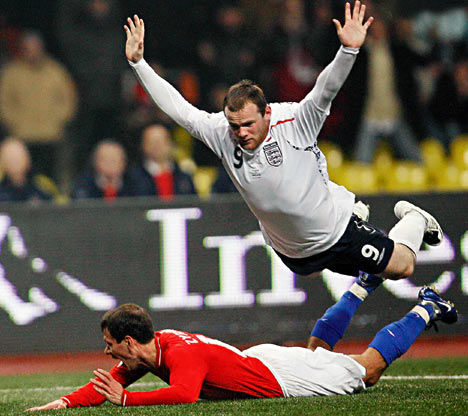
In my opinion, that's a penalty. The defender didn't touch the ball, but Messi's legs. Messi lost his balance and that was enough to kill the threat on Getafe's goal. It was still a goalless draw. Messi decided not to fall as long as he can still stand on his feet. The referee thought that as long as Messi is not flying in the air, banging on the field, rolling like a wool ball holding his leg at one moment and his head in another, before raising his arms and screaming complains, no penalty is deserved. Messi didn't do this act, and he got no penalty. Was a little dive enough to set the records right?

If the defenders feel free to kick you at well, is there any fairness for the forwards to start a mental game that make the defenders think twice to find a smart way to defend rather than a reckless approach? Because when you don't dive at all (and here I am not claiming that Messi doesn't do it at all), you may end up harassed by football butchers.
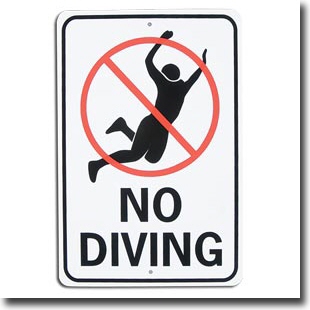
But maybe, some dives make it hard for anyone to argue the annoyance of that habit.



Follow us on Twitter (@Footballmood)
Against Manchester united in the Champions league final –Roma 2009 Barcelona’s selection included seven youth academy players who led Barcelona to win the sextuple. Arsenal’s coach, Arsene Wenger usually counter English premier League transfer’s policy by pointing out Barcelona’s model of trusting youth. FC Barcelona enjoyed a great cycle in La Liga and the Champions league by integrating Ronaldinho, Deco, Eto’o, Henry, kind of transfers to Youth academy players like Messi, Iniesta, Xavi, Pique and Puyol. Is it all rosy for the future?

One of the main features of Barcelona’s success in the past few years is their reliance on their youth academies in building the first team. FC Barcelona provided unique evidence that big clubs can win titles –lot of titles- depending on the products of their youth farms. Make no mistake, the club spent generously on buying quality players as well. Yet, any observer can assure that the framework was based on the likes of Puyol, Iniesta, Xavi, Messi, and the reactivated youth product Gerard Pique after a nap outside the Catalan orbit.
One of the reasons leading to that successful integration of the youth in the first team was the concurrence of their qualities with the opportunities available in the squad. Puyol and Xavi were already two of the most experienced and reliable players at the beginning of the new cycle of success during Frank Rijkaard’s era. Valdes got his chance in the first match of the season 2003-2004 instead of Rüştü Reçber who recovered from an injury one day before the match. His weak Spanish language was another reason for Rijkaard to bench the experienced Goalkeeper who responded: “It is not normal for a goalkeeper of my history and caliber to be left out because I don't speak Spanish.” Well, he had his chance to prove his doubters wrong. Yet, his performance made it possible even for a deckchair to take his place. Valdes opportunity to become a first teamer was the unavoidable outcome of the need to turn things around. FC Barcelona’s U-turn in that season from a catastrophic start to a brilliant comeback was an outcome of many factors. Ronaldinho’s magic was one. Signing Edgad Davids was another. Benching Rüştü Reçber was a given.
Andrés Iniesta’s promotion curve was so long that you can’t expect any other youth to have that level of generosity and patience to work and wait. He made his debut on 29 October 2002 in a UEFA Champions League game against Club Brugge, thanks to Louis van Gaal. But he had to wait more than two years to become an established first team player. His uncontroversial character and kind attitude helped him adapt with the life in the shadows of other starters –while most of the time he deserved more playing time than some of those. The departure of Deco and Ronaldinho sealed Iniesta’s position as an indispensible starter.
Messi had the qualities to help him finding his way to the first team. Yet, even during the Rijkaard’s seasons one can notice something missing while analyzing Barca’s offense. With Eto’o scoring for fun through the center and Ronaldinho being his brilliant self, the right flank was just ordinary to say the least. That fact increased the need to promote that young talent to fill that need. That’s why, there was no real threat on Messi’s destiny to become a key player for the club.
Pedro’s and Busquet’s integration was as smooth as a knife slicing butter. They filled the need of depth in the first team. They took that chance to develop their qualities rapidly before taking advantage of the drop in form the first options suffered to hijack their spots and stamp themselves as key players.

Though for every happy story there is a less entertaining tale. In the past few years Barcelona had to deal with some Youth-related complications. There is the Giovani vs Bojan incident where the two players were the subject of favor-ism between the fans to extend that Giovani was regularly whistled by the home fans.
Bojan himself demonstrates another challenge. Not only is the first team under the pressure of achieving good results, but also Barcelona B. When Barcelona B suffered a relegation experience before, Bojan refused to play in the lower division and threatened the club to leave. Barcelona had only one choice and that is to promote him to the first team though he was not ready. That factor hammered the player development later on. At the moment, the youth teams are producing waves after waves of quality talents and one can only wonder how will Barcelona manage to protect their youth assets if Barcelona B relegated to a division the youth feels uninterested to compete in? Especially if we keep in mind that there are lot of Arsenes and Wengers waiting on the corner.
In the other hand, having your reserve team in the second division and almost close to compete for a promotion to the first division where the first team compete (Though legally they can’t play there) make your youth feel they are more ready to play for the first team after serving one season in the reserve.
That’s a tricky situation when you have six or seven players expecting to be promoted in a year or –at most two. Is there enough space in Barcelona’s squad for all the upcoming youth? I can name five defenders, three midfielders who have a quality talent that eventually will make them knock the first team door in the following two years. Is there enough room for them, knowing that signing new players from outside the club is a given? If anyone thinks it is just a case the club will need to fix with only the current Barcelona B players then just have a look on the other youth ranks. How will Barcelona satisfy the demand of having such an extremely successful youth policy?
Youth players who survived in the club till they earned their place in the first team were those who saw the light at the end of the tunnel early –like Messi and Busquets. If you are a young midfielder playing for Juvenil A squad, you look forward and see four years of Xavi added to eight to ten ears of Iniesta, twelve years of Jonathan Dos Santos and Thiago Alcantara, then contentious news of the imminent acquisition of Cesc Fabregas. He will not be that certain that doing an Iniesta and wait will be smarter than doing a Cesc Fabregas.
The key issue here is the threat that FC Barcelona may start over-depending on the youth in a way that affect the squad quality. That will lead to a decline in performance which will damage first and before anything else the youth development. One of the main reasons why Messi found it smooth to develop was the fact that he was introduced to the first team at a period where the team was performing well. He integrated without lot of pressure. Giovani Dos Santos was not that lucky, for example.
The answer is easy, the need of taking brave decisions offloading the good youth so we keep a space for the best. Yet, won’t that send a bad message for the youth so they start looking for the exit door as soon as they can? And more importantly, will that make future talents more hesitant to join the club academy in the future?

Villa’s move to Barcelona is so far the most exciting transfer for the summer. A player who scored 129 goals and created 53 in the past 5 years for Valencia joins the Catalan offense armada. Spanish media published dozens of articles about the definite departure of Ibrahimovic because he will not have a place in Barca’s lineup while some-me included- considers Villa acquisition as the best news for Zlatan. But what can we expect from Barcelona offense next season?
Barcelona offense before Villa:
There was a general dissatisfaction between Barcelona’s fans when you ask them about the offense line performance of last season. Such dissatisfaction usually targets the newest kid in the building A.K.A Zlatan Ibrahimovic, especially after the inflated values stamped on his transfer. No one can argue that Zlatan was not the greatest of them all and if he is seriously considering winning the champions’ league he needs to improve his contribution with the club. Yet, with the declination of Henry and injury owes of Iniesta, I couldn’t resist thinking of Eto’o’s performance the season when Ronaldinho and Deco disappointed while watching Barcelona’s performance in 2010.
/Break: Relevant paragraph: world cup 2010:
I usually stress on the need to structure a permanent offense presence at the highest point possible on the field. If the team is defending, that offense reference has to position the threat in line with the opponent’s last center back. In the final third –when the team attacks- a permanent presence in the box with sufficient support is a must. One of the reasons I doubted that Brazil will win the world cup was the lack of support inside the box where only Fabiano can cause damage –beside set pieces. One of the points I voiced regarding Spain is that to win the world cup they need to have Torres in the selection with Villa. Time confirmed that.
“Offense wise, Kaka’s form will be vital to link midfield with offense and guarantee change of play which will be important against parked buses Brazil will face. Yet, the most notable concern is the lack of players who can create threat inside the box. Something they may need if the opponent left no spaces for the Brazilian forwards to demand the ball in the space or shoot from outside the box. Only Fabiano can get advantage of Maicon and Bastos crosses. That’s why I think it was better to use a player like Baptista who can serve better than Elano the system Brazil is using.”
"After the game against Switzerland, Vicente del Bosque modified the selection slightly to solve problem number one: Lack of offense presence inside the box. He counted on Torres as a striker with Villa exposing the spaces."
/End. Back to topic!
Season 2008-2009
In his first season, Henry struggled to fit the role requested as a left wing. In the second season he had his best performance at the club. It was not just about adaptation. It was not only because the team as a whole performed better which is a need for any forward to meet the expectations. It was basically because his role was modified. Eto’o’s Henry played the role of Ronaldo’s Rooney for Manchester United. He was a player who creates spaces, shake defense line and open to channels (left). He was the first player to run forward exposing the space and demanding the ball upfront, supporting Eto’o when the team retain possession. Eto’o was the player who took advantage of that work (synchronized with the work of the group) and did what he like to do most: scoring (without ignoring his immense contribution otherwise). That’s why shuffling the lines forward when retaining possession was smooth and timed.
The second alternative applied in 2009 was having Yaya-Keita-Xavi in the midfield with Iniesta-Eto’o-Messi playing upfront. Regardless of the impression that “Iniesta does not score so he can’t play on the flank” the team eventually scored the same rate of goals with this alternative as they did using the first one. The keys of success for this alternative were 1) With Iniesta moving to the midfield more often to contribute in the buildup, Messi had to work less in that department (than he had to do in the first alternative, Henry-Eto’o-Messi), so he was able to demand the ball closer to the opponents’ area. 2) Eto’o’s style for being a player who likes to demand the ball behind the opponents’ lines which forced the opponent defense line to be more conservative to create spaces behind (ultimately created more spaces between the lines to move the ball forward. When the team attacked the box Keita was the player who supported Eto’o in the box. He didn’t score lot of goals but he pulled the defense attention and created spaces for Messi and Eto’o to operate.
Season 2009-2010
Barcelona Tactics last season were subject to lot of discussions. Was it 4-3-3, 4-2-3-1, 4-1-3-2, 4-2-4, 4-1-4-1, 4-4-2, or simply a 4-3-3 is not what matters most. The loss of Henry meant the 2009th first alternative is not valid anymore. Pedro is a good player. But he wasn’t able to serve that offence dynamics in his first season. He can’t serve as a “station” holding on the ball and giving time for the players to reposition, instead he accelerate the tempo even when there is no sufficient support, squeezing the options and spaces instead of creating them. Besides, he is a typical Barca player whose first priority is the ball, not the field dimensions. Sometimes running into the space upfront even if you get no passes serve the team much more than moving deep and doing a Xavi. Remember that substitution del Bosque made in the world cup final (Navas for Pedro)? That’s exactly what I mean regardless of my opinion about starting Pedro in the first place then subbing him that early for Navas. But it shows What Pedro is good at, and what he is not as good. No doubt, he was one of the best performers for Barcelona last season, and one can only expect him to get better next season. But the point here is not about his individual qualities but the contribution he makes with the system in hand. Pedro’s inclusion –as Ibra’s inclusion- required system modification. Such changes take time to turn fruitful.
The absence of Iniesta either for injury or lack of form (even when he played) ruined the advantages of the second alternative. He wasn’t in the midfield to assist Xavi nor he was on the wing/midfield to contribute in the buildup keeping Messi upfront. That situation forced Messi to contribute in the midfield more than he did before and kept him a bit far from the offense department. Ibra in the other hand is not an Eto’o who enjoys playing between the defenders waiting the pass in the space. He is a forward who like to touch the ball more often and if his teammates didn’t deliver it to him he will come all the way to get it. The output was a Barcelona offense playing in the midfield. When the team succeeded to shuffle the lines forward everyone was happy. Interestingly-for example- that the games Keita scored his goals were the games where Ibra produced his finest performances with the club. Coincidence?
Ibra generated some of the complexities of Barcelona’s offense. But he wasn’t THE complexity. Lot of theories took place last season and it went so far that I had to make a long rant in one of my posts responding to one of the most popular arguments: Bojan should have played against Inter instead of Ibra. When Coincidences support an argument there is no place for logic. Which is pretty much the case here. But later on, the upgraded accomplished version of Bojan dressed in a Spanish kit proved otherwise against Switzerland and later against Holland (none of them were even close to Inter’s quality).
Barcelona offense with Villa:
The first thing to expect for last season is that ibra will not be sold. Hear me Sandro? The second thing to expect is that the complications of last season will not exist. Zlatan took a whole season to adapt. Pedro is improving every time he blinks his eyes. Bojan already announced that for next season he will not be the squad child anymore, he feels like a man;-) The best thing ever happened to Messi was losing the world cup because that will generate him with enough hunger for the following four years. And there is a Villa in the villa.
Villa will no doubt be the player who can complement Ibra most and both can create acres of spaces for Messi. The three players will create offense triangles more than an offense line. Messi behind both Villa and Ibra is one. Ibra being the head of the triangle while setting offense then pulling the defense put of position for Messi and Villa to demand the ball behind the defense is another. Ibra playing behind Messi and Villa then crushing into the box is an option as well. There are countless options and it will be up to pep to decide how to approach every game. The three players are assists generators. The three players can create spaces and can expose them. The three players –if you analyze their attributes- complete each other like the colors of a painting. There are lots of reasons to feel excited about this offense troika.
But while hailing the fantastic three, let’s not forget the excitement of the fantastic four when the club signed Henry to join Messi, Ronaldinho, and eto’o (Though, I wasn’t that excited, but that another story). We all know how that tale ended up. Will the fantastic meet the expectations this time?

World cup 1986, I remember the final between Germany and Argentina. A German team carrying high expectations on their shoulders against an ordinary Argentina carried on the shoulders of one freakily skillful midget. I remember Maradona in that game being the destabilizer who helped his teammates to be the neutralizers. Well, Maradona will be there today trying to provide more of the same linking Messi to a joystick he controls from the bench.
But make no mistake; defense will win this game, not offense. Both teams have the magic box required to win the battle. The homework is to find the right recipe to nullify the opponent’s offense.
The German team is not subject to intense analysis. They were the most convincing side in the tournament so far, ticking all the boxes for a title contender. Not a favorite when the tournament kicked off. Decent defense. Youth and Experience perfectly mixed. Width. Aggression. Offense Presence in the box. No dependency on a specific player but more a group of quality players feeding a system of play. All seems to be well planned by Joachim Loew. The rest is for the football gods to plan. But can Maradona hunt them down today?
Maradona demanded apologies for all those who doubted his team quality. I think it’s still too early to brag. Put me on the record, I am one of the doubters. And so far I didn’t see anything interesting enough to apologies. He can win me over if he won this one. But how?
Not sure what he is planning as he has been the most unpredictable coach so far in this tournament (a good thing may be). I will consider it a good start to pick the following selection:
Romero, Gutierrez, Burdisso, Demishelis, Heinze, Mascherano, Bolatti, Di Maria, Messi, Tevez, Higuain.
Maradona will find it more tempting to use Otamendi over Gutierrez for being more committed defensively. But that will not actually add a lot defensively. Having Burdisso (notice that I put him as a RCB not a LCB as he played so far), Demishelis, and Heinze as three center backs are more than enough. Add to that the fact that Germany’s left fullback is not as offense oriented as Lahm on the right. That means the two threats on Argentina right flank will come either from Podolski who cuts inside more than he hug the lines, and Klose moving to channels. Both cases are containable by the defense trio assisted by the tracking back of Tevez and co. Especially with Di Maria checking Muller on the opposite flank. Ozil is a case on his own. He can cause threat on the left, right, and center. He attacks spaces. That’s why having Bolatti in the selection will be crucial to man mark him so he doesn’t distract others from doing their original defensive roles. Mascherano will be the man supporting any weak department creating cover and depth. If the two players Ozil and Bolatti cancel each other, Maradona will be the one smiling at the end of the day.
Maradona also need to avoid using a containable offense setup. So far, Messi was the player serving behind Tevez and especially Higuain. If that will be the case against Germany, Messi may have a tough day against Khedira and Schweinsteiger. I say flip the triangle. Play Messi as a “9” on Friedrich and Mertesacker and Let Tevez and Higuain get advantage of the chaos produced by this twist.
Tevez work rate will be a bless if used behind Messi. Opening to the left he can help Di Maria keeping Lahm where he hates: Playing defense. Moving to the other flank he can assist Gutierrez to stretch the Germans defense. From the center he can put huge pressure on Khedira and Schweinsteiger especially while retaining possession. All that will serve as an advantage for Messi and Higuain who will be completely dedicated to abuse spaces created to generate scoring opportunities. I won’t complain if Milito plays the Higuain role though. In that case he can play the destructive role between the two center backs. But it’s more unlikely than the whole scenario mentioned already.
Or maybe, Maradona will have more magic than we think…


The most complicated challenge for any coach is to help an average team to shine on a world class level. Maradona achieved the most unattainable task: leading a world class team to perform as an average bunch of amateurs. Argentina will be one of the most interesting teams to watch. At least they have the most interesting coach.
I will not dive deep in his selection choices. I believe the coaches should be judged based on their tactical systems first before evaluating the cards selected to serve such systems. But first let’s point out three major challenges Maradona had to deal with:
1) Lack of quality fullbacks to count on.
2) Creating a Juan Román Riquelme free selection.
3) Lack of natural target men/Poacher s to compliment the skillful forwards and attacking midfielders in the team.
Maradona tackled these challenges selecting this lineup:
Romero, Heinza, Samuel, Demichelis, Otamendi, Mascherano, Veron, Di Maria, Gutierrez, Messi, Higuain
To cover for lack of quality fullbacks coaches usually go for one of the following:
1) In the presence of one quality wingback (and sometimes even by customizing a wing) who lack defensive quality, Coaches may use him as a fullback and slot a center back on the opposite flank to serve as a fullback who serves as a third center back when the wingback push forward.
2) In the presence of two quality wingbacks, coaches either use them both with two holding midfielders with one of them moving deep to play as a third center back or they reshape the tactics to something similar to 3-5-2 with the wingbacks playing in front of three center backs with a holding midfielder I between.
3) Some more daring coaches (especially if the squad lack quality wings), may structure a 3-4-3/3-3-3-1, etc… with the wingbacks serving as wings.
Regardless of any critical evaluation for each option, Maradona decided to take a different approach selecting two center backs to serve as fullbacks (Though Heinze played as a fullback before, but he serves more as a left flanked Center back for Argentina). It may sound like a reasonable idea. It secures the team defensively and offers the offense the chance to focus on what they can do best. Yet, the defects of this option are more than the advantages:
 1) During the qualification games –Maradona era- one of the main problems of the team was the crack between the offense and the defense units. There was a huge space between the lines. The current option will only make things worse during offense buildup.
2) This structure fits more the underdogs, not the favorites or the competitive teams. The lack of overlapping runs from the fullbacks will terminate the offense options on the flanks. Most of the teams –especially in the group stages- will play two holding midfielders in front of four defenders. A fullback with a holding midfielder can terminate any threat Argentina can generate on any flank as long as none of the fullbacks contribute offense wise.
3) Unlike the common observation, this option will not serve the team defensively. Having only Mascherano in front of static four will create enough space in the midfield for the opponents to generate fast counters to the Argentineans’ defensive third. Keeping in mind the lack of pace and positioning sense of the defense it is always better to put more pressure on the opponents higher on the field rather than tracking them back. A fullback who contributes in offense can also serve a better defensive task for being closer to the lost ball and capable of either putting early pressure on the ball holder as an initial attempt to win back the ball or he can close spaces in the midfield while retreating to his position. We can expect Demichelis to move forward to assist Mascherano while the team in possession, but neither him nor the two center backs he leaves behind has enough qualities to perfect this option without causing more chaos.
Creating a Juan Román Riquelme free selection: I like the player, but I also support the idea of keeping him outside the squad. His poor work rate and lack of defense contribution and attitude is infectious. You can’t create a group that fight and work as a unit with Riquelme being involved in the selection. But there is a need to create the right offense dynamics to cover the absence of such a quality player. The first wrong decision was selecting Veron, especially for the current system applied. He performs well, but while his defensive contribution is not much better than that’s of Riquelme, he plays much deeper in a selection that lacks fullback offense contribution and a poacher who can benefit from the offense setup generated from the flanks. From the current squad (and I will not comment on the players who are not selected for the World cup), Javier Pastore is a better option there.
Lack of natural target men/Poacher: Higuain is not the answer. Period. Milito, may be. Or even Tevez, the bull. Not Higuain. He is a quality player but he can’t offer any significant addition to the mix around him. See it this way: the main quality of Higuain is 1) creating space when he opens to the flanks. 2) Slicing through the opponent defense demanding the ball in the space. Yet, 1) with the lack of immense offense on the flanks where the opponent fullbacks have only one player to deal with (the wing), why will the opponents center backs move to support? Especially with the presence of holding midfielders and flanked midfielders. 2) Where will the spaces come from with the lack of positional interchanges? No fullbacks involved, wings dealing with their own issues and if they cut inside the selection gets too narrow unless if Messi open to the flank(which may not serve them). A deep laying playmaker that can barely catch any defense with surprise… The outcome will be inevitable: Messi isolation.
In fact the team counts completely on Messi’s skills for the offense to click. That’s the only hope they can bet on regardless of the great individuals they have. Something you can build castles of hopes it will happen if we were in the 1986 football era. Nowadays, it’s not as easy as Messi’s talent may inspire.
Zaragoza Vs Barcelona
A.K.A the Messi show